
Lower North Shore trees: four councils, four different size tests
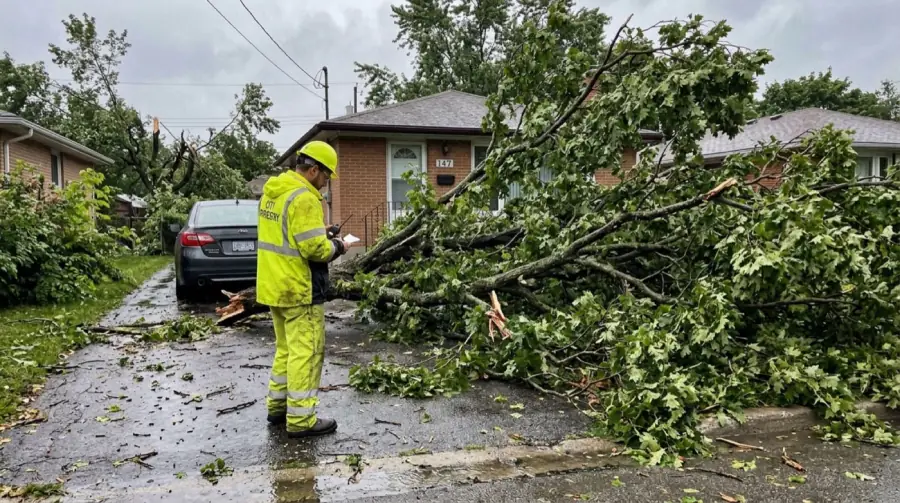
On the Lower North Shore, the first thing to know about a tree job is that a tree one council ignores can be protected by the next. Lane Cove, Hunter's Hill, Willoughby and the City of Ryde each measure trees their own way, so the same backyard tree can need a permit in one suburb and not in another.
This guide compares those rules, links each suburb page, and explains how removals, pruning and stump grinding are handled. The crew is an insured Beecroft team, working in Sydney's north west since 2004 and a member of Arboriculture Australia, and the Lower North Shore is one of the areas it serves. For suburbs further north, see the North Shore overview.
Comparing the councils' tree rules
- Lane Cove Council: a permit is needed to prune or remove a tree taller than 4 metres, with a canopy spread over 5 metres, a trunk over 150mm across at 1 metre above ground, or roots of 40mm or more. Some work, such as pruning dead branches or removing species on its Fee Free Species List, is Fee-Free.
- Hunter's Hill Council: protects prescribed vegetation, meaning anything 4 metres or taller or with a stem 200mm or wider at 1.4 metres, plus trees on its Significant Tree Register and heritage-listed trees.
- Willoughby City Council: asks for a permit, applied for online, when a tree is taller than 4 metres, has a trunk girth over 600mm at 1.4 metres, or a crown spread over 3 metres. Some locally native species can need one too.
- City of Ryde: uses a Tree Management Application, with exemptions that include trees with a trunk under 150mm at 1.4 metres, work on a tree within 3 metres of a house, and removing deadwood or pruning less than 10 per cent of the crown in 12 months, with conditions.
Note that Willoughby measures girth, around the trunk, while Hunter's Hill measures diameter, across it. A 600mm girth works out at roughly 190mm across, so the two tests are closer than they first look.
Heritage properties take a different path
Heritage changes the process in at least three of the four council areas. Lane Cove sends heritage items, Heritage Conservation Areas and places of Aboriginal heritage significance through a development application on the NSW Planning Portal. Hunter's Hill also requires a development application for heritage-listed or significant trees, and for trees on heritage properties or in a heritage conservation area. In the City of Ryde, the exemptions do not apply to heritage properties.
If your home is heritage listed, talk to the council before planning any tree work.
Our tree services on the Lower North Shore
Whichever of the four councils covers your street, the work on offer is the same, and the price is fixed in writing after a free visit:
- Tree removal: taken down piece by piece, with a crane where a tree is too big or too hard to reach.
- Tree pruning: thinning, reducing and lifting crowns, and cutting out deadwood, to AS 4373-2007.
- Stump grinding: stumps ground below the surface, including on sloping and tight sites.
- Land clearing: trees and vegetation cleared where an extension, pool or driveway is going in.
- Storm damage: dangerous branches and fallen trees made safe and cleaned up.
- Green waste: chipped and removed, unless you would rather keep the mulch or firewood.
There is more on each service on our tree services page.
Suburb guides on this side of the North Shore
- Lane Cove: Lane Cove Council.
- Hunters Hill: Hunter's Hill Council.
- Gladesville: split between the City of Ryde and Hunter's Hill, so check which one covers your address.
- Putney and Ryde: City of Ryde.
Chatswood is in Willoughby City Council's area, so the Willoughby rules above apply there.
Tree pruning, and when it is not enough
A tree that is crowding a roof or shading a whole yard can often be kept with pruning to AS 4373-2007, Pruning of Amenity Trees. That might mean thinning or reducing the crown, lifting low limbs, cutting deadwood, cleaning palm fronds and seed pods, or trimming hedges and shrubs. Lane Cove and Hunter's Hill both apply their permit rules to pruning as well as removal.
Removal becomes the better choice when a tree is dead, diseased, wrecked by a storm, has roots causing problems or stands in the way of construction.
Land clearing and trees in the way of a build
A planned extension, pool or new house is often what brings a tree into question. The crew removes trees that block construction and clears land for development sites once approval is in place. In Lane Cove, remember that cutting roots of 40mm or more falls under the permit rule even if the tree stays.
Taking down large trees in sections
Felling a tree in one piece is rarely an option near houses. Climbing arborists cut it down from the crown in manageable lengths, lowering each one on ropes through pulleys. For the biggest or most hemmed-in trees, a crane lifts sections out, which limits the impact on the property. The work is all done outside, so nobody needs to be home.
Stump grinding on sloping and tight sites
Grinders in several sizes mean a stump can be reached on a slope, at the top of steps, or close to a fence or retaining wall, in either the front or back yard. The cost turns on the stump's size, the access, any specialised equipment and how near it is to buildings. Add it to your removal quote or book it as a separate job.
Dangerous branches and the clean-up
Storm-damaged limbs, fallen trees and hazardous trees are cleared. If anything has landed on or near a powerline, keep back and call the electricity distributor before anything else.
On every job the crew cleans up when the work is finished, and you can keep the mulch or have the timber cut for firewood. A free tube-stock tree comes with each removal, and the crew carries $20 million in public liability insurance. Call 02 9133 4095 or use the quote form for a free visit and fixed written quote.
Lower North Shore tree removal questions
How much will it cost to remove my tree on the Lower North Shore?
It depends on height, spread, access, what lies beneath the tree, whether a crane is used and whether you want the stump ground. Every quote is free, written and fixed, with GST included.
Do I need council approval to remove a tree on the Lower North Shore?
It depends on your council. Lane Cove, Hunter's Hill and Willoughby all use a height test of 4 metres alongside other measurements, and the City of Ryde lists exemptions for small trees and some minor work. The owner applies, not the contractor.
Which council covers Gladesville?
Gladesville is split between the City of Ryde and Hunter's Hill Council. Your rates notice will name the right one.
Can my tree be pruned instead of removed?
Often, if it is healthy. Crown thinning, reduction or lifting can solve many problems. A dead, diseased or badly storm-damaged tree, or one whose roots are causing trouble, is usually better removed.
I have a tree problem. Where do I start?
Book the free visit on 02 9133 4095 or through the quote form. An arborist looks at the tree, says whether approval is likely to be needed, and sends a written price.
Can you deal with dangerous branches?
Yes, hanging and broken branches and hazardous trees are made safe. Keep clear of any branch near a powerline and call the electricity distributor.
Do you handle large trees near the house?
Yes. They come down in sections lowered on ropes and pulleys, with a crane on some jobs to lift pieces clear.
Tree removal near Lower North Shore
We also work in the suburbs around Lower North Shore:
- Tree removal Lane Cove
- Tree removal Hunters Hill
- Tree removal Gladesville
- Tree removal Putney
- Tree removal Ryde
Ready to get a price? Request a free quote or call 02 9133 4095.